



While every search campaign leverages keywords to reach relevant audiences, in the case of pharmaceutical advertising, keywords alone may lead to false positives. In practice, keyword targeting captures interest, not identity.
Patients, caregivers, students, and researchers all search the same terms as prescribers. When campaigns are built around keywords alone, pharma marketers aren’t targeting health care professionals (HCPs), but rather anyone who happens to type the right words into a search bar.
Audience targeting is a much better way for pharmaceutical marketers to reach the individuals making prescribing decisions.
Why Audience Targeting Is Not Widely Used in Pharma Search
Keywords have long been pharmaceutical marketers’ only lever to pull in search campaign targeting. Up until very recently, it was the only targeting option Google provided for “sensitive category” advertisers like pharma.
Over time, this structural constraint became the operating default. Despite the fact that Google has rolled out new targeting capabilities for HCP campaigns, many pharma advertisers are still stuck with tools that adhere to outdated, keyword-only targeting in search. Worse, they aren’t aware that there is a more effective way to find HCPs via search.
Why This Is a Pressing Problem For Pharma Advertisers
While Google now allows advertisers to build and certify a unique ad account specifically for HCP campaigns and enable custom match audiences, too few pharma advertisers activating search campaigns on Google are using this functionality. As a result, only a fraction of a brand’s current paid Google traffic to HCP domains actually reach HCPs.
To illustrate the problem, we recently audited a brand’s website. For the sake of anonymity, we are going to obscure some numbers but keep the integrity of the analysis as a demonstration.
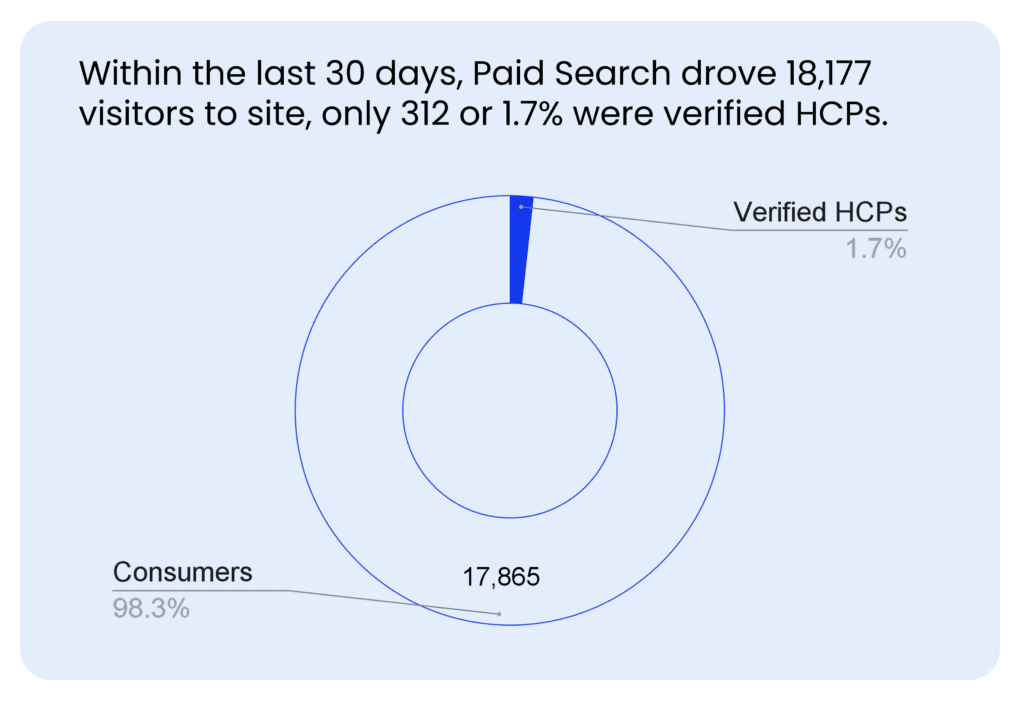
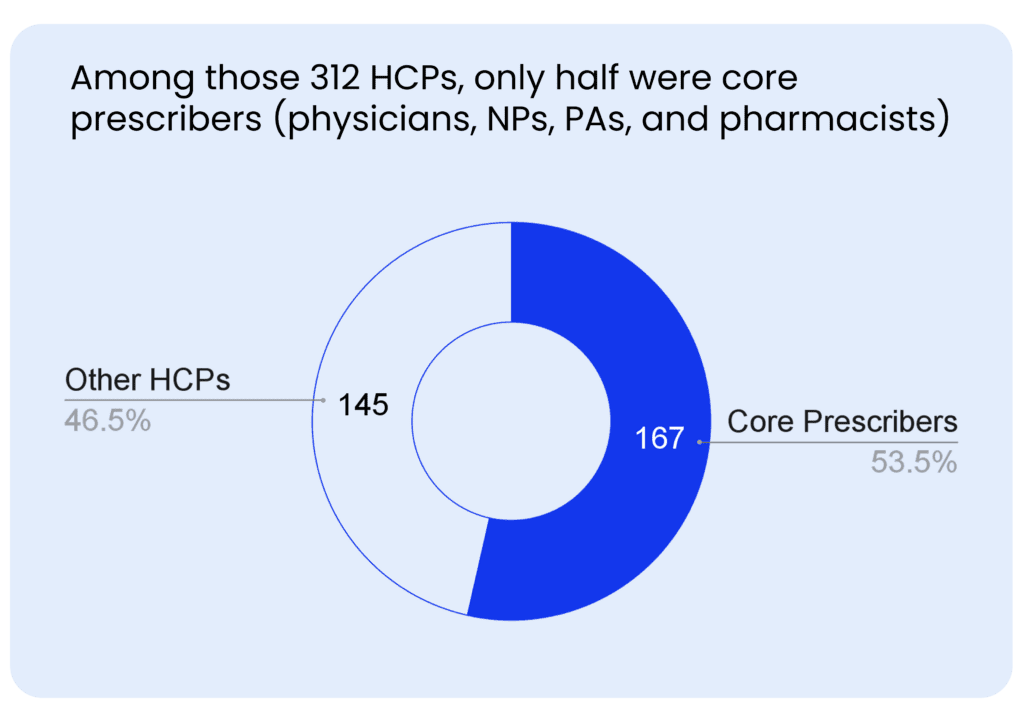
Within a one-month period on this brand’s HCP domain, 18,177 visitors arrived via UTMs tagged as Paid Search. Of that traffic, only 312 visitors (1.7%) could be verified as healthcare professionals. Among those verified HCPs, just 167 (54%) were core prescribers, defined as physicians, nurse practitioners, physician assistants, and pharmacists, meaning that less than 1% of total Search traffic ultimately reached the intended prescribing audience.
The Hidden Cost of Keyword-Based Targeting
When a majority of the search budget intended for HCPs doesn’t actually reach providers, it unintentionally slips from a specialized snipe to a broad DTC play.
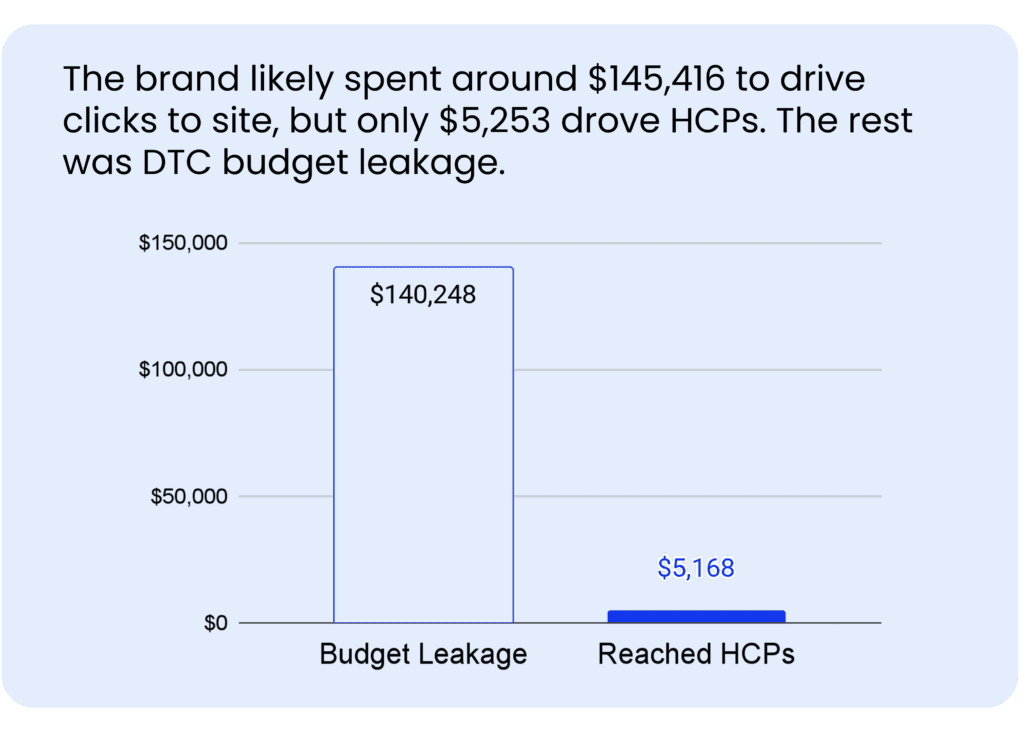
Let’s go back to this same brand website example. If 18,177 visits came from Paid Search and the average CPC in the pharmaceutical category ranges between $6 and $8 USD, the brand likely spent approximately $109,062–$145,416 per month. Of that spend, only about $3,876–$5,168 reached verified HCPs, and even less, approximately $1,722–$2,296, reached core prescribers.
The consequences of this are multifold:
- Massive budget wasted on the wrong audience and expensive pharma keywords
- Performance is judged without knowing who was actually reached
- Learning cycles may reinforce campaign elements that work on consumers, but don’t move the needle on HCPs
By ensuring your search budget is truly reaching HCPs, advertisers can properly allocate budgets, trust their insights, and optimize campaigns based on reliable signals.
How Audience-Based Targeting Changes the Equation
Audience-based targeting flips the model.
Instead of guessing based on keywords, marketers start with verified prescribers. They learn the searches, phrases, and paths physicians, nurses, physician assistants, and other HCPs actually use, and how those journeys differ by role.
In the Wrango platform, HCP audiences are built using real-world claims and EHR data tied to persistent identifiers like hashed email and MAID. That makes it possible to:
- Understand whether that exposure influenced prescribing behavior
- Confirm impressions were delivered to licensed HCPs
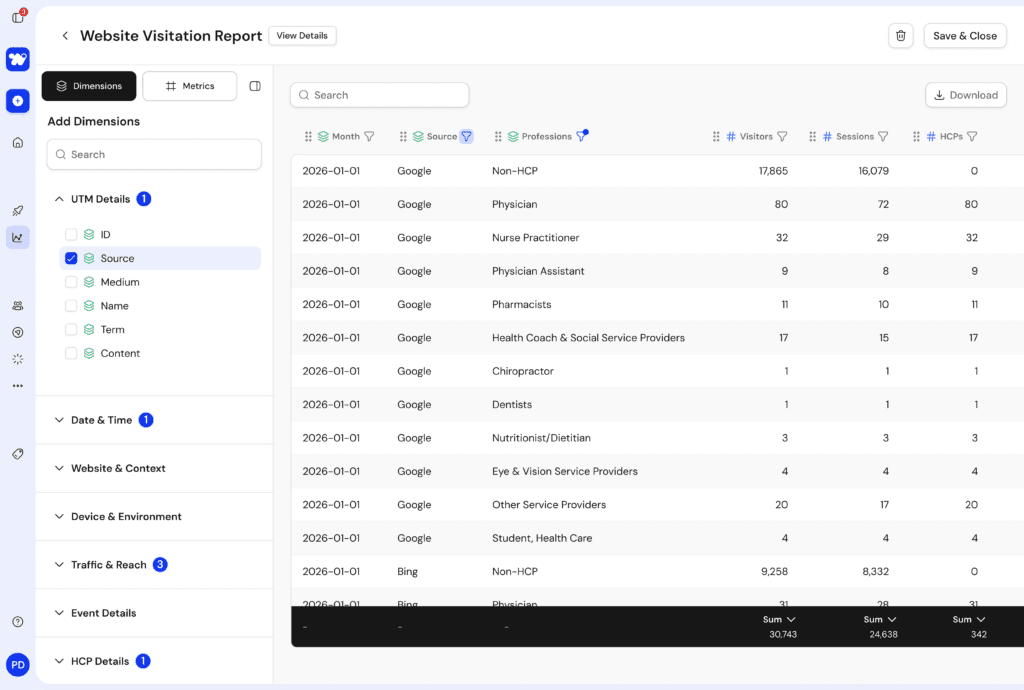
- Measure clicks and website interactions by profession and specialty over time
The Takeaway
Do this:
- Start with verified prescribers, not keywords, when your goal is to reach HCPs.
- Target all active prescribers and guide users to the right resources, even if they aren’t in a predefined match list.
- Use audience-level verification to understand who actually saw an ad and whether it influenced prescribing behavior.
Don’t:
- Lock campaigns into slow, manual processes that hide wasted spend and delay insight.
- Assume that bidding on HCP keywords means you’re reaching healthcare professionals
- Rely on clicks and site visits as a proxy for prescriber reach or impact
Connect With Our Team Today
If you’re questioning whether your search budgets are actually reaching prescribers, it may be time to rethink how precision is defined.
Book a demo with our team to learn more.