



Most HCP media plans assume that activating an audience directly in a DSP that accesses multiple SSPs will provide optimal reach. That assumption is not consistently true in practice.
Wrango’s programmatic workflow, built on OpenX’s SSP infrastructure, resolves HCP audiences across more identity signals than a standard DSP upload allows. That gap matters at scale: industry analysis from a leading bid intelligence platform recently found that 55 to 75 percent of programmatic spend is exposed to cross-SSP duplication, which can inflate CPMs without adding proportional reach. To quantify the opportunity, we ran a controlled comparison across multiple specialty pharma brand campaigns. Within each campaign, the same deterministic HCP audience was activated through both paths, with creative, budget, flight dates, and bid strategy held constant. The only variable that changed between paths was the activation method.
Same audience. Two activation paths.
DSP-direct activation
The deterministic HCP audience uploaded as hashed emails into a leading DSP and activated across the DSP’s full SSP graph.
SSP Deal ID activation:
The same audience is activated through OpenX’s SSP Deal ID (OpenXSelect™), executed inside the same leading DSP, using multiple identity signals to match physicians across supply.
Activation method changed reach by 32 percent
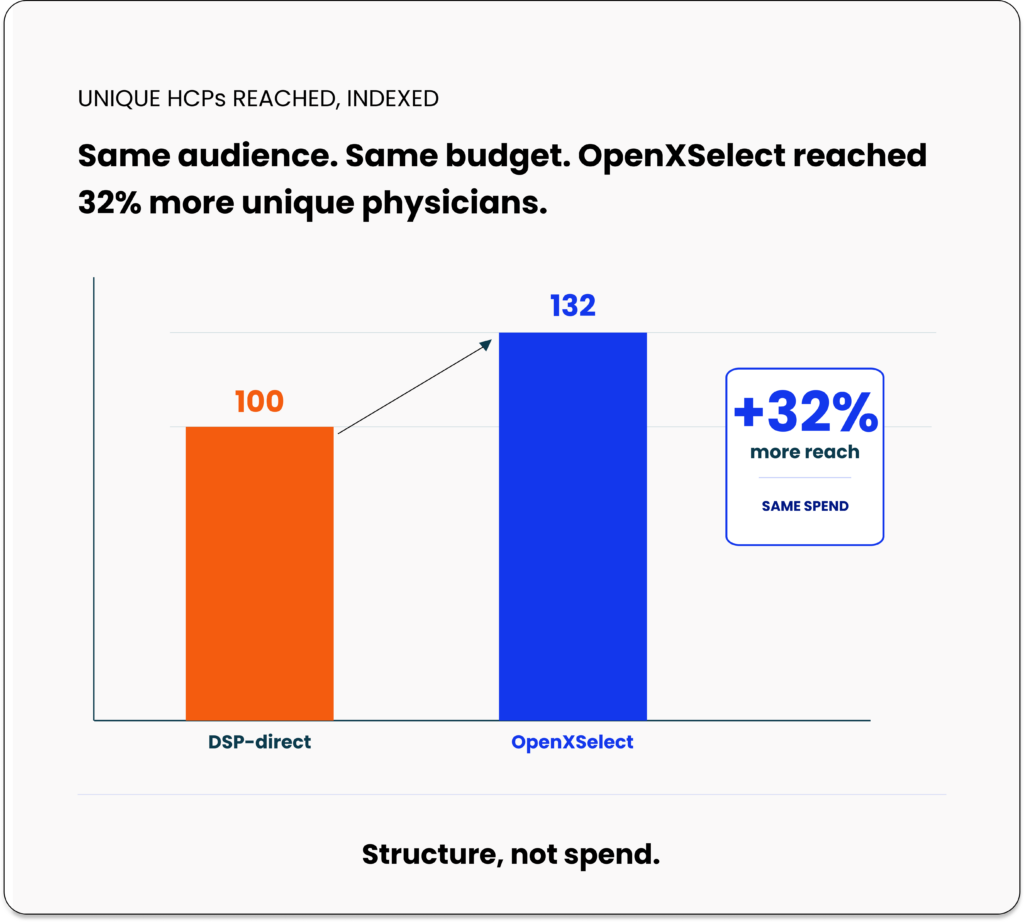
Across the full study, OpenXSelect reached 32% more unique HCPs than DSP-direct activation, on the same audiences and the same budgets.
Creative, budget, flight dates, bid strategy, and the underlying audience were identical across both paths. The activation method was the only variable that changed, which makes it the only variable that can account for the 32 percent gap.
The difference is reachability, not targeting
Most audience activation today relies on a single identifier per segment uploaded. Targeting stayed identical across both paths in this study. Reachability did not.
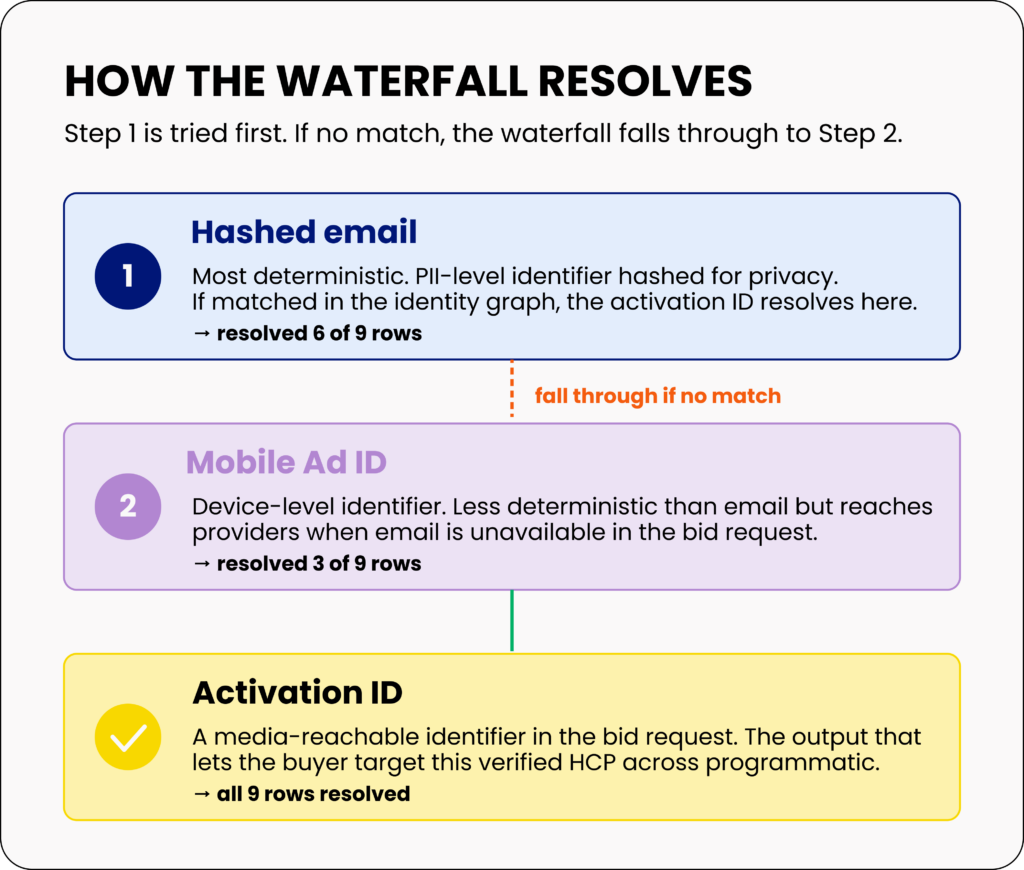
When activation relies on a single identifier, reach is limited to impressions where that exact identifier appears in the bid request. Wrango applies a prescriptive identity waterfall: start with hashed email, fall back to mobile ad ID, resolve through to publisher IDs. The same physician becomes reachable across more of their real digital activity.
The logic in three steps:
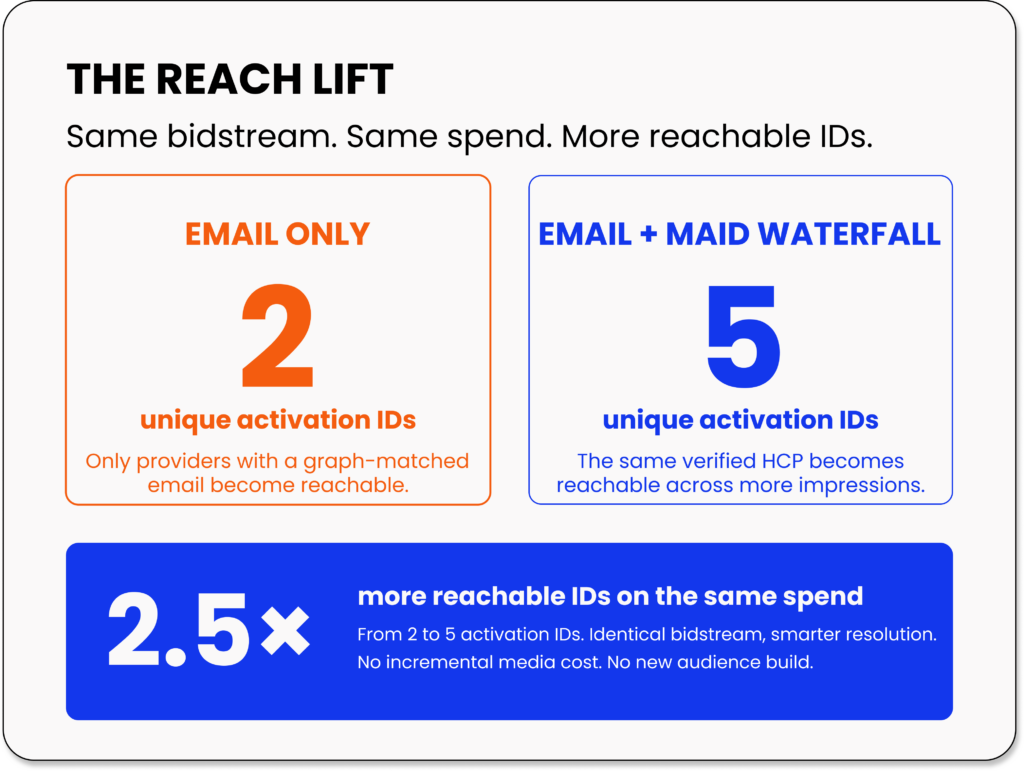
The payoff on a single HCP:
What this means for HCP media planning
HCP audiences are small and deterministic by nature. A specialty physician list doesn’t have the volume to absorb activation losses the way a mass consumer audience can, which makes identity resolution the lever that decides how much of that audience actually shows up, not just how precisely it was built. Our study shows you can leave 32 percent of the audience on the table before a single impression runs.
Start here: check whether your HCP audience is activated via a single identifier or through multi-signal identity resolution. A single identifier gets you part of the reachable audience. Multi-signal resolution, run through one identity-rich supply path, gets you the rest.
See it against your own media plan
This is the approach Wrango built with OpenX: one identity-rich supply path, resolved through a waterfall rather than a single identifier, so the same audience and the same budget reach more of the physicians you’re already paying to target.
Get access to the platform and we’ll walk through what this looks like against your brand’s HCP media plan.