



What the Wrango Pixel is
The Wrango Pixel is one tag you place on your HCP domain. When a provider visits, the pixel resolves that visit to a verified NPI against Wrango’s identity graph of 4.6 million providers. No patient data. No guesswork. You learn which providers came to your site, what they read, and how often they return.
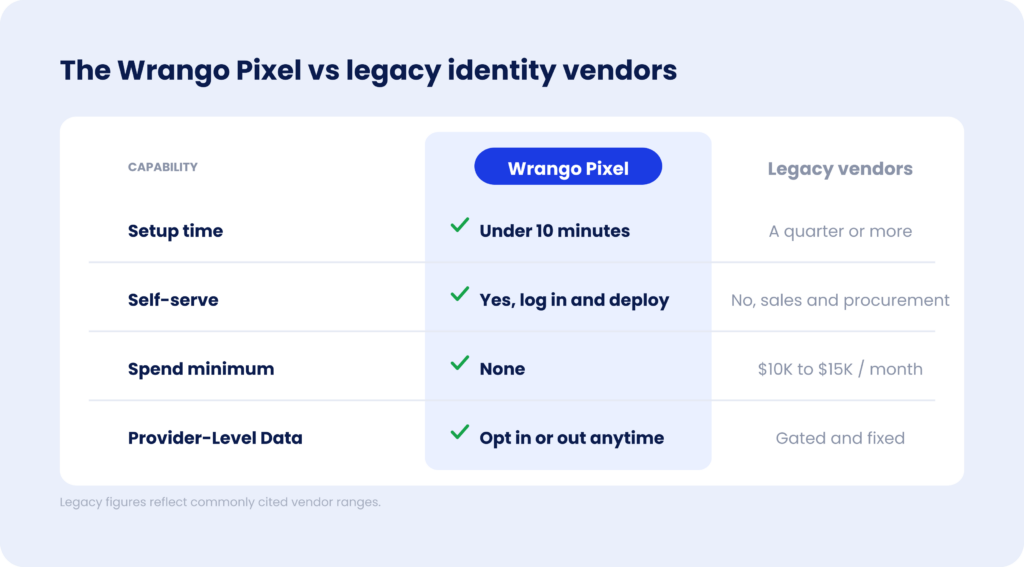
Setup takes under 10 minutes. No sales call. No contract to start. No spend minimum.
Most HCP measurement still runs on proxies. Clicks stand in for interest. Pageviews stand in for engagement. The pixel replaces the proxy with identity. Once you can name the provider behind a visit, three things change.
1. You can measure audience quality and uncover your real cost per HCP
Every audience provider says it has high-quality HCP data. Verifying it is the hard part. Once a campaign is live on Google, Meta, Reddit, LinkedIn, or Pinterest, you cannot easily tell whether your ads reached real prescribers or just people who searched the right words. Keywords capture interest, not identity.
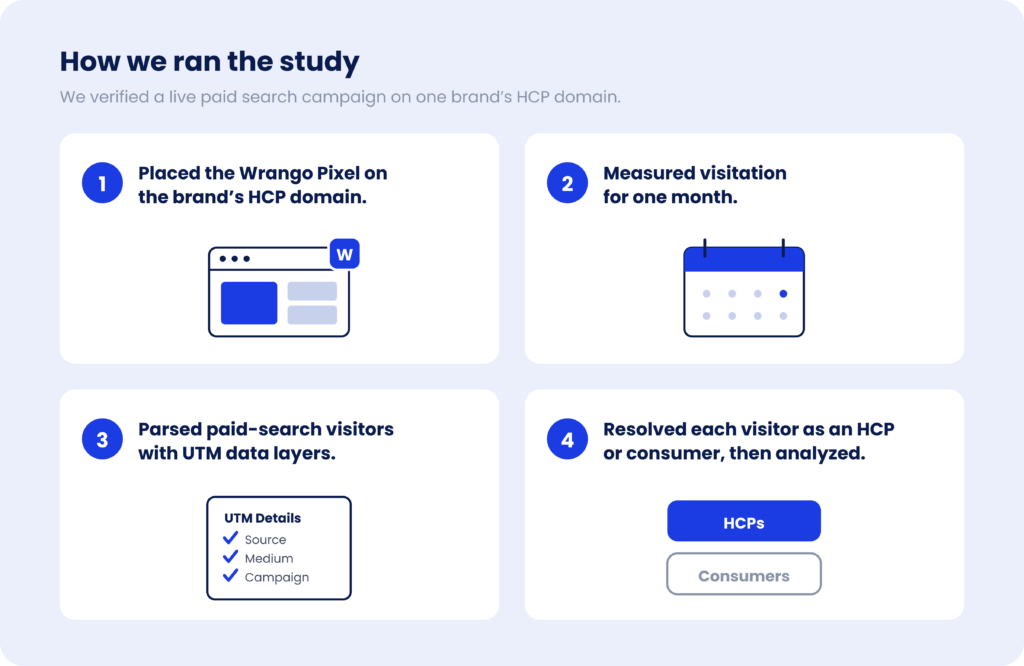
The pixel verifies it. To show how, we ran a study on a live paid search campaign.
Here is what it uncovered. Of 18,177 paid search visitors in 30 days, only 312 (1.7 percent) were verified HCPs, and just 167 of those were core prescribers. The brand spent $145,416 on those clicks, but only $5,168 reached HCPs, which put the real cost per HCP click at $464. After we added audience targeting built from verified provider data, that cost fell to about $21.
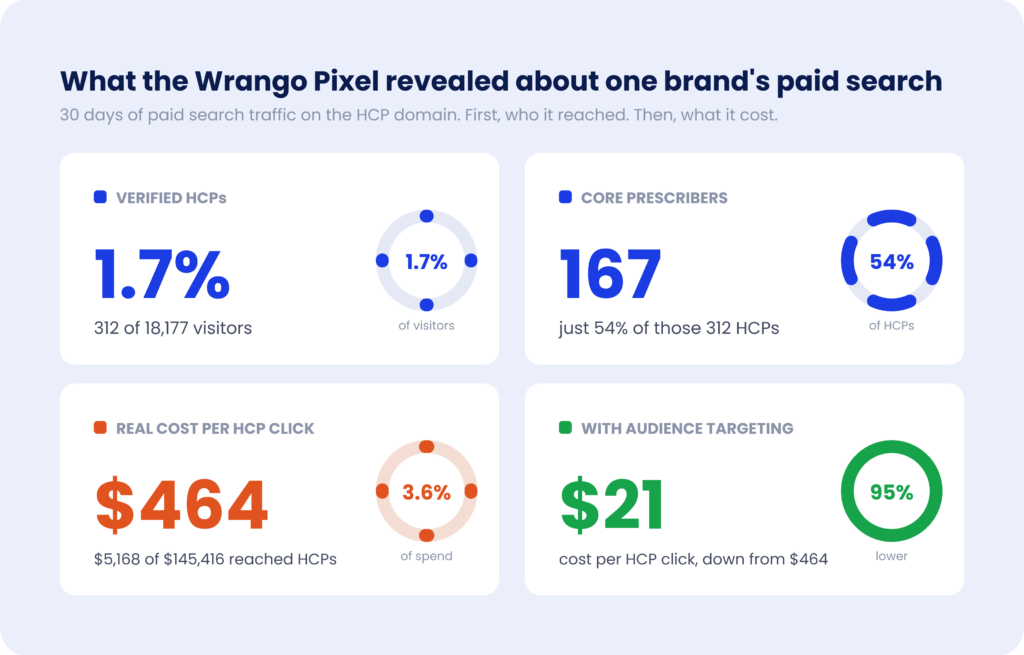
The pixel is what made any of this visible. You cannot fix spend leakage you cannot see. NPI-level resolution turns “we got traffic” into “we reached 167 prescribers, and here is what each one cost.”
2. You can feed your next-best-action engine a verified list of engaged prescribers
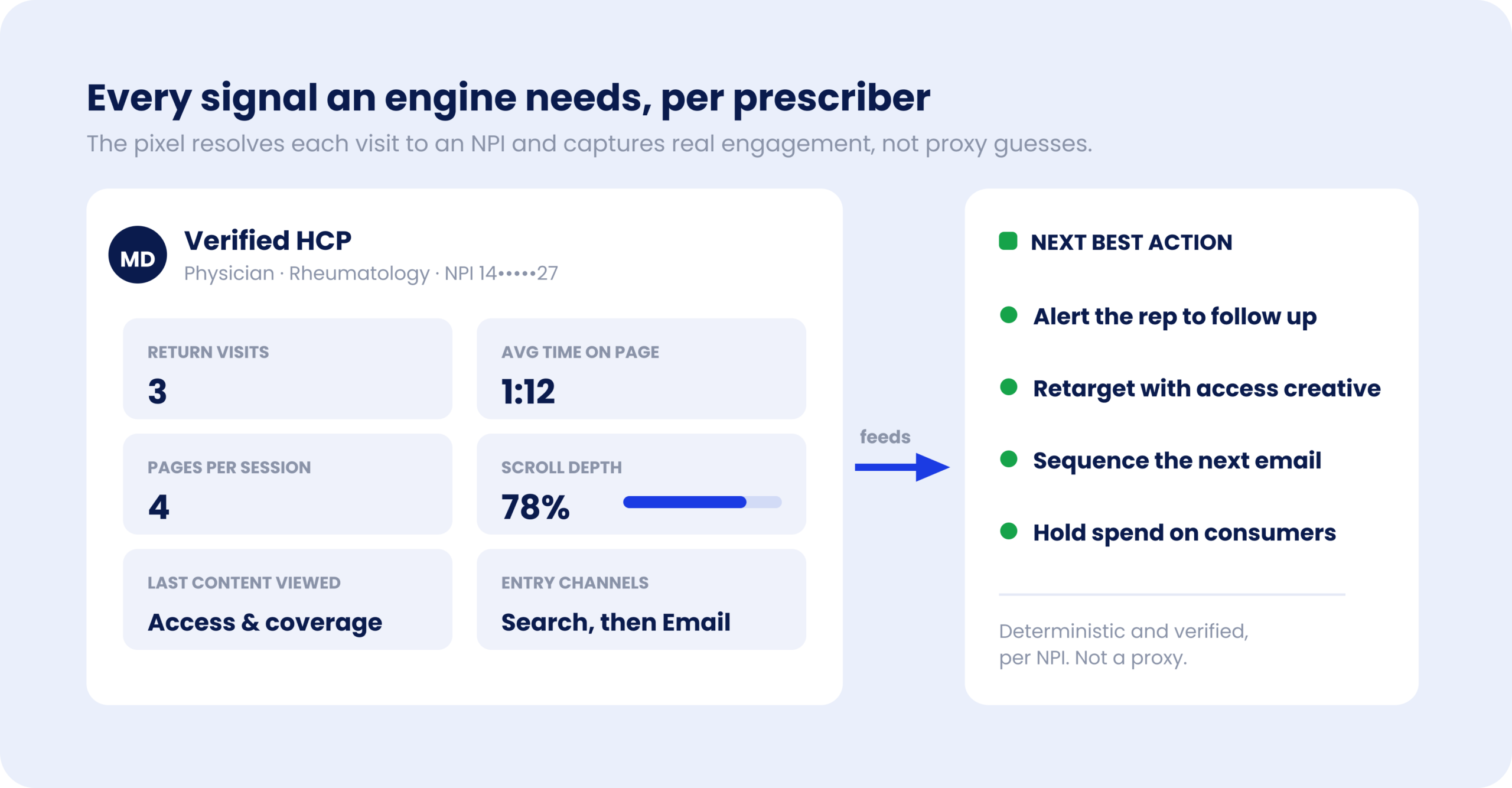
A resolved visit is a strong intent signal. The provider came to your site. They read specific content. They came back. That is very different from an email they never opened.
Wrango logs which NPIs visited, what they engaged with, and when. That record feeds the systems that decide what happens next.
Next-best-action engines in pharma use signals like these to time outreach and pick the right channel. Mature programs separate weak signals, like an accidental open, from strong ones, like reading a clinical resource or returning a second time. A site visit tied to a named provider is a strong signal. It tells the engine the provider is ready, and it tells the rep to follow up.
It also primes the conversation. A rep walking into a meeting already knows the provider read the dosing page twice and looked at the access section. The next message starts from what the provider already knows, not from zero. Marketing and field stop working blind to each other.
3. You can link cross-channel engagement to one identity, visit after visit
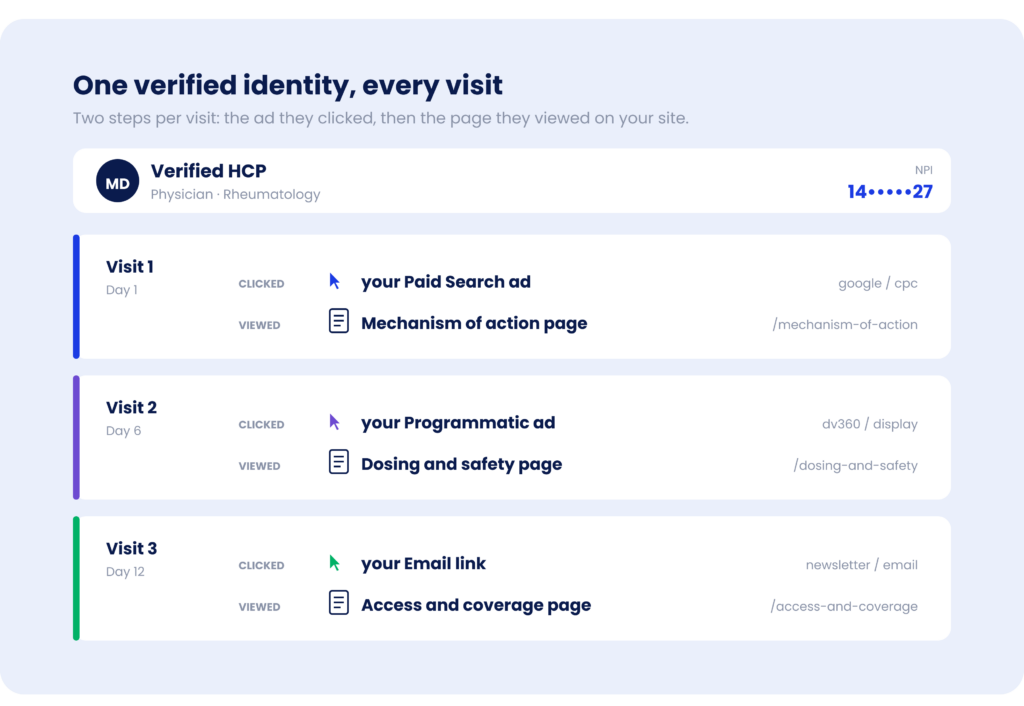
Providers do not engage in one place. They see you on search, on social, in programmatic, and at the point of care. Across all of it, your HCP site is the place they come back to.
That makes the site your best vantage point. Because the pixel ties each visit, on any channel, to the same verified identity, you can see the pattern over time. What did the provider look at on the first visit. What changed on the second. What did they return for on the third.
That sequence shows how a provider’s understanding is forming. You can order your content to match it. You can measure whether your other channels are actually moving providers back to the site. One identity, every visit, in one view.
Why the Wrango Pixel is different
Getting a pixel from a legacy vendor used to mean a procurement cycle, an enterprise contract, and a spend minimum. A decision could take a quarter. Most brands did the math and skipped it.
Wrango removed that gate.
- A true self-serve pixel. Log in, generate your tag, deploy it, and start resolving visitors in under 10 minutes. No sales call required.
- No minimum fees. No spend minimum to deploy the pixel and start resolving visitors.
- Resolution you control. Opt in or opt out of Provider-Level Data resolution whenever you want.
- Higher resolution. On live pixels, Wrango resolves around 10 percent of HCP site visitors against a graph of 4.6 million verified NPIs. Legacy identity platforms resolve 1 to 2 percent.
- One tag, three outputs. Provider identity from site visits, retargeting audiences built from verified prescribers, and claims enrichment that tells you more about the doctors who visit: their specialty, patient mix, and prescribing context.
- Built for compliance. No patient data is collected or shared.
The takeaway
If your site gets traffic and you cannot tell which visitors are physicians, you are not running an HCP campaign. You are running a traffic report.
Put the Wrango Pixel on your HCP domain before your next campaign. See who you actually reach. Feed your sales team and your next-best-action engine. Connect every touchpoint to one provider identity.
Get access to the Wrango platform today
Ready to deploy your pixel? Get access today and we will walk through what it looks like against your brand’s HCP media plan.